

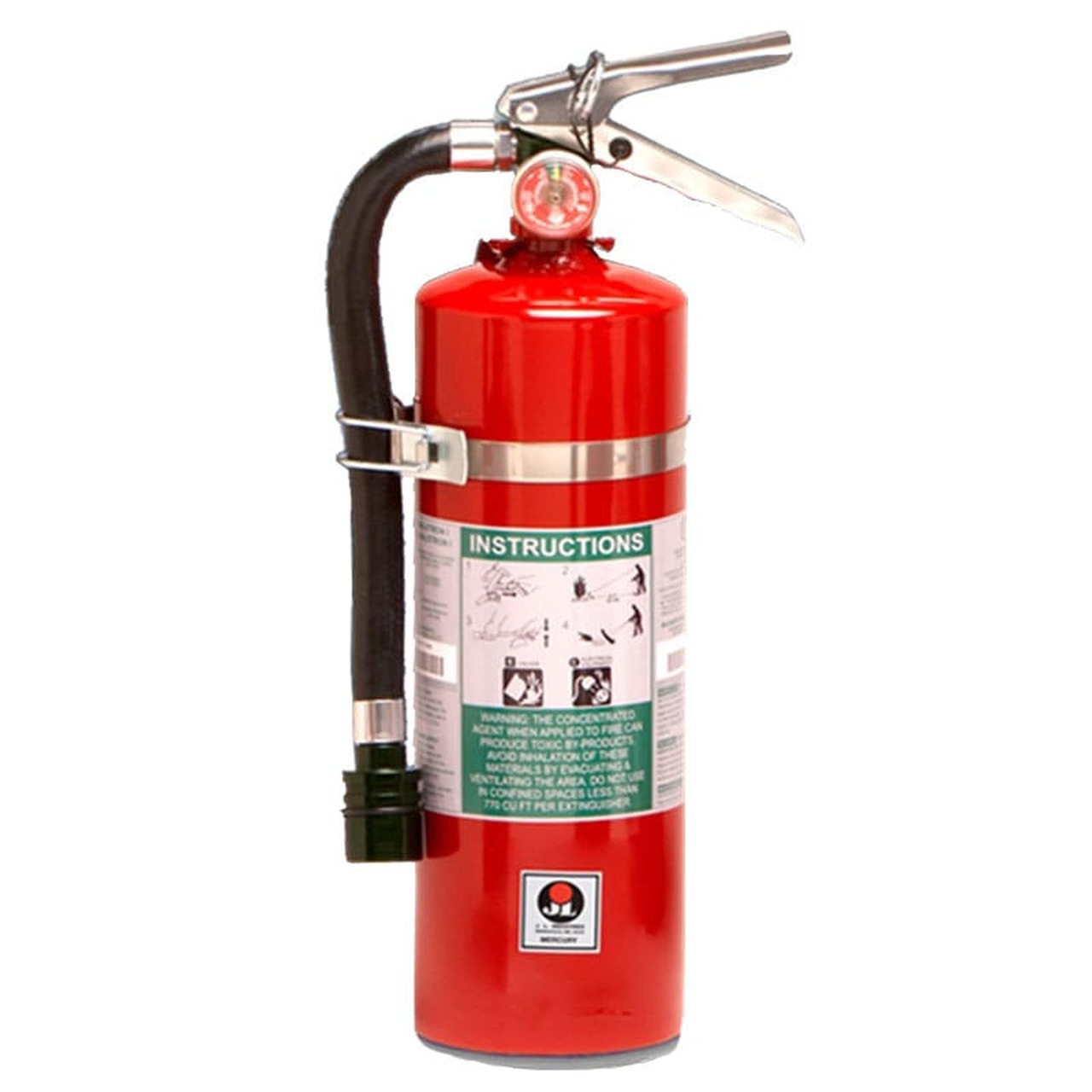
Fire extinguisher test and tag means inspecting each extinguisher on a set schedule, servicing or testing it when due, and recording the result on a tag attached to the unit. In the US, the core routine under NFPA 10 is a quick monthly visual check, a full annual maintenance by a qualified technician, and periodic hydrostatic testing of the cylinder every 5 or 12 years depending on the extinguisher type.
That tag is more than paperwork. It tells anyone who picks up the extinguisher in an emergency that it was checked recently and should work. This guide covers the main extinguisher types, which fires each one is meant for, and exactly what an inspection and tagging visit involves, so you know what to expect and what to check yourself between visits.
What Does “Test and Tag” Mean for Fire Extinguishers?
The phrase is widely used in Australia, where it covers both electrical equipment and fire safety equipment, but the idea is the same everywhere: a competent person examines the equipment, confirms it is in working order, and attaches a durable tag showing the date, the work done and who did it. In the US, the equivalent requirements come mainly from NFPA 10 (Standard for Portable Fire Extinguishers) and, for workplaces, from OSHA’s portable fire extinguisher standard (29 CFR 1910.157).
A complete program usually includes three layers:
- Routine visual inspection: A short check, typically monthly, that the extinguisher is in place, visible, charged and undamaged.
- Annual maintenance: A thorough examination of the mechanical parts, extinguishing agent and expelling means by a trained technician, recorded on the tag.
- Internal examination and hydrostatic testing: At longer intervals the cylinder is emptied, inspected inside and pressure-tested to confirm it can safely hold its charge.
Fire Classes: Matching the Extinguisher to the Fire
Before looking at specific extinguishers, it helps to know the fire classes used in the US. Using the wrong agent can make a fire worse, so the class rating on the label matters.
| Class (US) | Fuel | Examples |
|---|---|---|
| A | Ordinary combustibles | Wood, paper, cloth, cardboard, many plastics |
| B | Flammable liquids and gases | Gasoline, oil-based paint, solvents, propane |
| C | Energized electrical equipment | Wiring, panels, computers, appliances still plugged in |
| D | Combustible metals | Magnesium, titanium, sodium (mostly industrial) |
| K | Cooking oils and fats | Deep fryers, commercial kitchen grease |
Other countries use different letters. Australia, for example, uses Class E for electrical fires and Class F for cooking oils, which is worth knowing if you read product labels or service guides from overseas.
Water Mist Extinguishers
Water mist extinguishers discharge de-ionized water as a very fine spray. Because the droplets are tiny and the water is purified, the mist cools a fire quickly while reducing the risk of electrical conduction and of scattering burning material. Many models are listed for Class A and Class C fires, which makes them useful in places like hospitals, labs, museums and offices where a clean agent with low collateral damage is valuable.
When these units are tagged, technicians pay attention to the pressure gauge, the nozzle (the fine mist relies on it being clear), and the condition of the hose. Check the label on your specific model, since ratings vary between manufacturers.
Wet Chemical (Class K) Extinguishers for Kitchen Fires
Wet chemical extinguishers are built for cooking oil and grease fires. The agent reacts with hot fat to form a soapy layer on the surface, a process called saponification, which cuts off the oxygen and helps cool the oil so it does not reignite. Commercial kitchens, restaurants and hotel kitchens rely on them alongside fixed hood suppression systems.
Never use water on a grease fire; it can cause a violent flare-up. If you have dealt with the aftermath of a kitchen fire, our guide to common challenges in fire and smoke damage restoration explains what clean-up involves.
- Where to mount: Near cooking equipment but not so close that a fire would block access to it.
- What gets checked at service: Agent level, hose and wand condition, the tamper seal and pull pin, and the gauge or cartridge.
- Common issue: Grease buildup on the unit itself, which can make the label and gauge hard to read.
Carbon Dioxide (CO2) Extinguishers
CO2 extinguishers store carbon dioxide as a liquid under high pressure. When discharged, it expands into a cold gas that displaces oxygen around the fire and leaves no residue. That is why CO2 is popular for electrical equipment and flammable liquids: in the US they carry Class B and C ratings.
They do have limits. CO2 is not well suited to Class A fires because embers can reignite once the gas disperses, and it is not appropriate for deep-fat cooking fires. In small enclosed rooms the gas can lower oxygen levels, so operators should discharge it and leave the space promptly. The discharge horn also gets extremely cold, so hold the extinguisher by the handle and insulated parts only.
Unlike most extinguishers, CO2 units usually have no pressure gauge. During servicing they are weighed and compared with the full weight stamped on the cylinder to confirm they still hold their charge, which is one reason professional inspection matters for this type.
Dry Chemical Extinguishers
The most common extinguisher in US homes and offices is the multipurpose dry chemical (ABC) unit, usually filled with monoammonium phosphate. It handles Class A, B and C fires, which makes it a sensible all-round choice for a kitchen cupboard, garage or car. The downside is the fine powder it leaves behind, which can damage electronics and takes careful cleaning.
How Often Should Fire Extinguishers Be Inspected and Tested?
The table below summarizes the typical intervals in NFPA 10. Local fire codes and your insurer may add requirements, so treat this as a baseline rather than a complete rulebook.
| Task | Typical interval | Who does it |
|---|---|---|
| Visual inspection | Monthly (more often in harsh environments) | Building owner, staff or a trained person |
| Annual maintenance and tag | Every 12 months | Certified fire equipment technician |
| Internal maintenance (stored-pressure dry chemical) | Every 6 years | Certified technician |
| Hydrostatic test: water, water mist, wet chemical, CO2 | Every 5 years | Certified technician or test facility |
| Hydrostatic test: dry chemical (stored-pressure) | Every 12 years | Certified technician or test facility |
What Happens During a Test and Tag Visit
A professional Test and Tag visit follows a predictable routine. Knowing the steps helps you judge whether the job was done properly:
- Location and access: The technician confirms each unit is in its designated spot, visible, unobstructed and mounted at the right height.
- Label and rating check: The operating instructions and class rating must be legible and facing outward.
- Pressure or weight: Gauges are read to confirm the needle sits in the green zone; CO2 and cartridge units are weighed.
- Physical condition: The cylinder is checked for dents, corrosion, leaks and damaged threads; the hose and nozzle for cracks or blockages.
- Seals and pins: The tamper seal and safety pin must be intact, showing the unit has not been used.
- Service or replace: Units that fail are recharged, repaired, sent for hydrostatic testing or taken out of service.
- Tag and record: A new tag is attached with the date, the technician’s details and the type of service, and the record is added to the site log.
Your Monthly Self-Check
Between professional visits, a 30-second check per extinguisher catches most problems early:
- Is it where it should be, and can you reach it without moving anything?
- Is the gauge needle in the green?
- Are the pin and tamper seal in place?
- Is there any visible damage, rust, leakage or a clogged nozzle?
- Is the current tag attached and within date? Initial and date the tag or log if your site requires it.
If an extinguisher has been used even briefly, have it recharged before putting it back. A partly discharged unit may lose pressure and fail when it is next needed.
Common Mistakes That Put Extinguishers Out of Service
- Wrong type for the risk: A CO2 unit in a commercial kitchen or a water unit beside electrical panels.
- Hidden units: Extinguishers blocked by furniture, stock or coats are effectively missing.
- Expired tags: An out-of-date tag can count against you in a fire inspection or an insurance claim.
- No training: People should know the PASS method: Pull the pin, Aim at the base of the fire, Squeeze the handle and Sweep side to side.
Portable extinguishers are just one layer of protection. To understand how they work alongside fixed systems, read how fire sprinklers work to keep you safe. Rules vary by state, city and type of premises, so check with your local fire marshal or a licensed fire protection company for the requirements that apply to you.
FAQs
How often do fire extinguishers need to be tagged?
Under NFPA 10, portable extinguishers need a monthly visual inspection and an annual maintenance check by a qualified technician, who attaches or updates the tag. Hydrostatic testing is required every 5 or 12 years depending on the type.
Can I tag my own fire extinguisher?
You can and should do the monthly visual check yourself and record it. The annual maintenance, recharging and hydrostatic tests in commercial settings must be done by a certified technician, and local rules may require licensing.
Which extinguisher is best for electrical fires?
CO2 extinguishers are a common choice because they are non-conductive and leave no residue. Water mist units listed for Class C fires and multipurpose ABC dry chemical extinguishers can also be used, but always check the rating on the label.
What extinguisher should be used on a kitchen grease fire?
Commercial kitchens should use a Class K wet chemical extinguisher. At home, smother a small pan fire with a lid and turn off the heat, and never use water on burning oil.
What happens if a fire extinguisher fails inspection?
It is removed from service and either repaired, recharged, sent for hydrostatic testing or replaced. A temporary replacement should be put in its place so the area is not left unprotected.
Bottom Line on Fire Extinguisher Test and Tag
Choose the right extinguisher for the fire risk, check it yourself every month, and book a qualified technician to service and tag it every year. Keep the records together so you can show inspectors and insurers that your equipment is ready. For more home and workplace safety guides, visit the Magazinozo homepage.
