

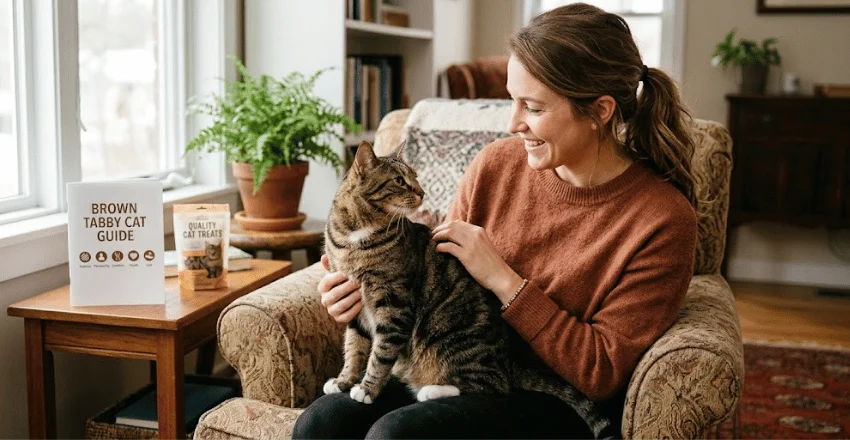
A brown cat can be a striped tabby, a solid chocolate feline, or a breed with warm brown shading. The term describes coat color, not one breed, so appearance alone cannot confirm ancestry. For U.S. owners, the useful distinction is whether the coat is tabby, solid chocolate, cinnamon, sable, or pointed.
| Key question | Quick answer |
|---|---|
| Is brown a breed? | No. Brown describes coat color or pattern. |
| Are brown coats rare? | Brown tabbies are common, while solid chocolate and cinnamon coats are less common. |
| What causes true chocolate color? | Recessive TYRP1 variants reduce black pigment and create chocolate or cinnamon shades. |
| Which breed is defined by solid brown? | The Havana Brown has an even, warm brown coat under the CFA standard. |
| Can color identify breed? | No. Pedigree records and breed traits matter more than color alone. |
| Does brown fur change basic care? | No. Care depends on age, health, coat length, activity, and breed needs. |
Direct answer: A brown cat may be a common brown tabby or a less common solid chocolate or cinnamon feline. True chocolate and cinnamon shades come from recessive TYRP1 variants that reduce black pigment. The Havana Brown is the best-known breed defined by an even, warm coat and green eyes.
Key Takeaways
- Brown tabbies are common in mixed-breed and pedigreed populations.
- Solid chocolate or cinnamon coloring needs specific recessive genes.
- The Havana Brown is the clearest example of a breed built around uniform brown coloring.
- Burmese, Oriental, Devon Rex, Persian, Abyssinian, and Maine Coon cats can show brown-related colors or patterns.
- Color does not prove breed, health, or personality.
- U.S. adopters should choose for health and household fit before coat color.
What Makes a Brown Cat Brown?
Feline coat color begins with pigment genes, and several genes work together to shape the final appearance. UC Davis identifies the brown locus as an autosomal recessive system involving the TYRP1 gene. Its dominance order is B over b over b-l, producing black, chocolate, and cinnamon outcomes.
A chocolate animal usually has b/b or b/b-l at that locus, while b-l/b-l produces cinnamon. Other genes influence whether that pigment appears solid, tabby, diluted, shaded, or restricted to points. That is why two animals described as brown can look completely different.
Are Solid Brown Cats Rare?
Solid chocolate and cinnamon coats are less common than the familiar brown tabby pattern. A true solid coat needs recessive color variants plus genes that suppress visible tabby patterning. Random-bred populations therefore produce uniform chocolate coats less often than striped brown coats.
No reliable national count exists for solid chocolate felines in the United States. Registry standards still show that the color is established within several pedigreed breeds. The CFA Havana Brown standard specifically requires an even, rich, warm chocolate shade throughout the hair shaft.
7 Brown-Related Breeds to Know
Several recognized breeds can display chocolate, sable, cinnamon, ruddy, or brown tabby coloring. Those labels aren’t interchangeable because each standard defines color differently. The table below shows seven useful examples for U.S. readers.
| Breed | Brown expression | Easy identifier | What to know |
|---|---|---|---|
| Havana Brown | Solid warm chocolate | Green eyes, brown whiskers | Brown is central to the breed standard |
| Burmese | Rich sable brown | Compact body, gold eyes | Sable is one of four CFA colors |
| Oriental Shorthair | Chocolate or cinnamon varieties | Long lines, large ears | Many colors and patterns are recognized |
| Devon Rex | Chocolate or cinnamon | Wavy coat, large ears | CFA allows genetically possible colors |
| Persian | Solid chocolate or chocolate patterns | Long coat, round head | Chocolate appears in several color divisions |
| Abyssinian | Ruddy or cinnamon | Ticked coat | Brown appearance comes from banded hairs |
| Maine Coon | Brown tabby | Large body, shaggy coat | Brown tabby is a recognized patterned form |
1. Havana Brown
The Havana Brown is the strongest match for people picturing an even chocolate coat from nose to tail. CFA describes the ideal color as rich, warm brown, with brown whiskers and green eyes. The association describes the breed as medium-sized, muscular, curious, and affectionate.
2. Burmese
CFA recognizes sable as the classic Burmese color and describes mature coats as rich, warm brown. The shade can lighten slightly on the underparts without becoming a patterned coat. CFA also describes Burmese cats as curious, clever, friendly, and strongly people-oriented.
3. Oriental Shorthair
Orientals can appear in chocolate, cinnamon, and several related patterns or point colors. Their body type is long and refined, with large ears and a wedge-shaped head. Treat color as a breed feature rather than proof of identity.
4. Devon Rex
The Devon Rex can carry chocolate and cinnamon coloring along with many other genetically possible shades. Its soft, wavy coat creates a different visual effect from sleek solid-coated breeds. Large eyes, large ears, and an active nature are more useful identifiers than brown coloring alone.
5. Persian
CFA includes solid chocolate, chocolate tabby, chocolate tortoiseshell, and chocolate point options within the Persian standard. The long coat can make brown shades look softer or deeper depending on lighting. Grooming needs are also greater than those of shorthaired breeds.
6. Abyssinian
Abyssinians often look warmly brown without having a uniform chocolate coat. CFA describes ruddy coats as burnt-sienna with black ticking and orange-brown undercoat. Cinnamon animals carry warmer red tones with chocolate-brown ticking across individual hairs.
7. Maine Coon
Maine Coons can appear in brown tabby patterns, which differ genetically and visually from solid chocolate. Their larger frame and shaggy coat make them easy to distinguish from many shorthaired brown breeds. Magazinozo also has a dedicated guide to Maine Coon cats for deeper reading.
Brown Tabby Versus Solid Chocolate

A brown tabby has visible stripes, spots, swirls, or ticked hairs over a warm brown ground color. The markings often include darker black-based pigment, especially along the spine, legs, tail, and face. Brown tabby describes a pattern and color combination, not a separate breed.
A solid chocolate coat looks much more even from root to tip, although young animals can show faint ghost markings. CFA explicitly allows ghost tabby markings in young Havana Browns. Don’t confuse those temporary markings with an adult tabby pattern.
How to Tell Which Brown Coat You Are Seeing
Start with pattern before guessing breed, because pattern is easier to observe accurately. Then compare the coat with eye color, body shape, hair length, and documented background. Use these checks as a practical first pass.
- Look for stripes, spots, swirls, or an “M” shape on the forehead.
- Check whether the fur looks even from root to tip in bright natural light.
- Notice whether darker color appears only on the face, ears, paws, and tail.
- Compare the coat with breed-standard features such as eye color and body shape.
- Use pedigree papers or DNA testing when accurate ancestry matters.
Photos can help narrow possibilities, but they cannot prove a pedigreed identity on their own. Mixed-breed domestic cats can share colors and patterns with registered breeds. A veterinarian can also help describe coat color during a routine visit.
Care Does Not Start With Coat Color
Basic care should follow the individual animal, not the shade of the fur. Short coats usually need less brushing than long coats, while activity and age affect feeding and enrichment. Routine veterinary care, dental care, parasite prevention, and safe indoor living remain more important than color.
Grooming tools should also match coat and claw needs rather than appearance. Magazinozo’s guide to cat nail clippers explains safer options for routine claw care. The broader Pets section also offers related guides for everyday feline care.
Finding a Brown-Colored Cat in the United States
If color matters to you, shelters and rescues are a practical place to start. Brown tabbies are widely available, while solid chocolate animals may take longer to find. Ask about health, behavior, medical history, and household compatibility before focusing on shade.
For a pedigreed Havana Brown or another specific breed, use established registry resources and verified breeder information. Confirm registration, health testing, parentage, and living conditions before committing. Avoid paying a large premium only because a seller markets a coat as “rare.”
Frequently Asked Questions
What breed is a brown cat?
No single breed has a brown coat. Havana Browns are defined by uniform warm brown coloring, while several other breeds allow brown-related colors. Mixed-breed domestic cats can also be brown tabbies or show other brown tones.
Are brown cats rare?
Brown tabbies are common, but solid chocolate and cinnamon coats are less common. Recessive color genetics help explain why uniform chocolate coats appear less often. Rarity varies by breed, region, and whether the animal is pedigreed or mixed-breed.
Is a brown tabby the same as a chocolate feline?
No, because a tabby has a visible pattern over its ground color. A solid chocolate coat is much more even and lacks normal adult striping. Young solid-coated animals can still show temporary ghost markings.
Can two black cats produce a chocolate kitten?
Yes, when both parents carry compatible recessive brown variants. A black-looking parent can carry chocolate without showing it because black is dominant. Genetic testing can identify these variants when breeding decisions require certainty.
Do brown cats have a special personality?
Coat color alone should not be used to predict temperament. Breed tendencies, early socialization, health, and individual experience matter more for daily behavior. Meet the individual animal and ask caregivers about observed habits before adopting.
The Practical Takeaway
Brown coloring covers several different genetic and visual outcomes, from common tabbies to uncommon solid chocolate coats. The clearest first step is separating pattern from color before guessing ancestry. Breed standards and pedigree records provide better evidence than appearance alone.
If you are choosing a new companion, put health, temperament, and household fit ahead of color. Use Magazinozo’s pet guides to plan routine grooming and care after adoption. A beautiful coat matters most when the animal behind it fits your home well.
