

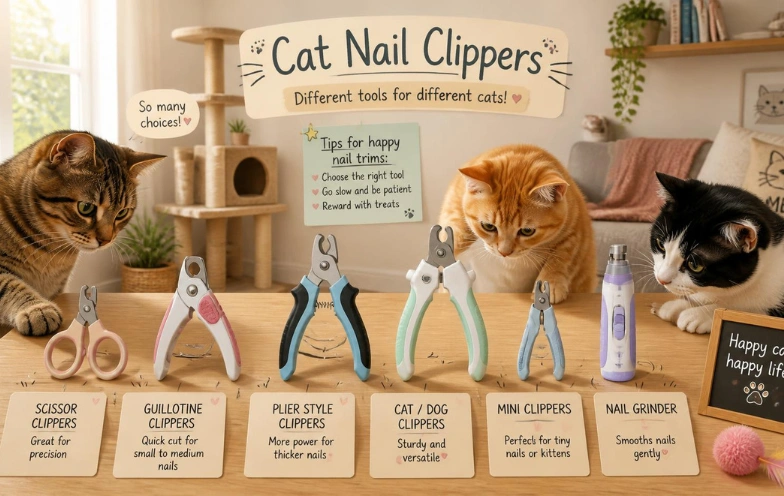
Trimming a cat’s claws at home becomes much easier when the tool fits both the cat and the person holding it. The right cat nail clippers should make the claw easy to see, give you steady control, and cut cleanly without crushing or splitting the tip. For most beginners, a small scissor-style trimmer is a sensible place to start.
| Key point | What to know |
| Best starting style | Small scissor-style trimmer |
| Other options | Guillotine, plier-style, and electric grinder |
| Most useful features | Sharp blades, comfortable grip, appropriate size |
| Main safety concern | Avoid cutting the quick |
| Typical trimming schedule | Check claws about every 2–4 weeks |
| Helpful extras | Treats, towel, styptic powder |
| When to get help | When a claw is damaged, ingrown, bleeding persistently, or trimming is unsafe |
Direct answer: For most U.S. cat owners, small scissor-style cat trimmers are the easiest starting point because they give a clear view of the claw and good control. Choose sharp stainless steel blades, a comfortable nonslip grip, and a size that matches your hand and your cat’s claws, then trim only the sharp tip.
Which Cat Nail Clippers Are Best for Most Cats?

Small scissor-style cat nail clippers are often the easiest option for routine home grooming because the compact blades leave much of the claw visible. That visibility matters when you’re trying to keep the cut safely away from the pink quick inside the claw. They’re also widely available from U.S. pet retailers at relatively low prices.
That doesn’t make one design ideal for every cat. Cats with thicker claws may benefit from a stronger plier-style tool, while a grinder can suit a patient animal that tolerates sound and vibration. Guillotine designs can make fast cuts, but their enclosed opening may make positioning harder for an inexperienced owner.
| Type | Best suited to | Advantages | Drawbacks |
| Scissor-style | Most kittens and adult cats | Good visibility, precise control, compact | Small handles may not suit every hand |
| Guillotine-style | Owners comfortable positioning the claw | Quick cutting action, simple mechanism | Can obscure the cutting point |
| Plier-style | Thick or tough claws | More cutting power, larger grip | Bulkier around small feline claws |
| Electric grinder | Cats comfortable with noise and vibration | Gradual shortening, smooth finish | Slower, louder, usually more expensive |
Verdict: Start with a sharp, cat-sized scissor trimmer unless your cat’s claws or your own hand comfort suggest another style. Several experts favor this format for its visibility and control, though veterinary guidance shows you can safely use more than one clipper style with proper technique. The person doing the trimming should feel confident seeing and controlling each cut.
Scissor-style trimmers
Scissor models usually have two small blades with curved openings that help position a feline claw. They let you approach the sharp tip without feeding the claw through a hole, making small adjustments easier. This design is a strong choice for a first home-grooming tool or a household with kittens.
Pros
- Clear view of the claw.
- Good control over small cuts.
- Compact and widely available.
Cons
- Tiny handles may feel cramped.
- Dull blades can make rough cuts.
- Lightweight models may struggle with unusually thick claws.
Guillotine-style trimmers
A guillotine clipper places the claw through an opening before a moving blade cuts the exposed section. Some veterinary guidance considers this design easy to use, while other experts point out that the hole can reduce visibility around the quick. That difference is a good reason to choose based on your own control rather than assuming one design works for everyone.
Pros
- Fast cutting action.
- Simple hand motion.
- Useful for owners already comfortable with the design.
Cons
- Harder to see the exact cut point.
- Positioning can take practice.
- Less forgiving with a moving or impatient cat.
Plier-style trimmers
Plier models use larger handles and stronger cutting blades than many compact feline scissors. They can be useful when an adult or senior cat develops thicker claws that a tiny trimmer struggles to cut cleanly. Their extra size can also make them less convenient around kittens or narrow claws.
Pros
- More leverage for thick claws.
- Often comfortable for larger hands.
- Strong cutting action.
Cons
- Bulkier around small paws.
- Can partially block your view.
- More tool than many kittens need.
Electric grinders
A grinder removes claw material gradually instead of making one quick cut. This gives you considerable control over how much comes off, and it can leave a smooth edge afterward. The tradeoff is noise, vibration, and a longer session, which can make grinders a poor fit for sound-sensitive cats.
Pros
- Removes small amounts gradually.
- Produces a smooth edge.
- Useful for some thick claws.
Cons
- Noise can frighten cats.
- Takes longer per claw.
- Costs more than basic manual trimmers.
7 Features to Check Before You Buy
Choosing cat nail clippers by appearance alone can leave you with a tool that feels awkward once your cat starts moving. Focus first on control, visibility, and clean cutting rather than extra features that don’t improve the trim. For U.S. shoppers, major pet retailers carry simple manual options and powered alternatives, so there’s little reason to settle for an uncomfortable design.
- Sharp blades: A clean blade should cut, not crush, the claw.
- Cat-appropriate size: Smaller cutting heads give you more room to see a feline claw.
- Comfortable grip: The handles should stay steady without requiring excessive pressure.
- Good sight lines: You should be able to see where the blade will meet the claw.
- Smooth action: The tool should open and close without sticking.
- Easy cleaning: A simple design makes it easier to remove claw debris after grooming.
- A shape you can control: Your confidence with the tool matters as much as its style.
If you’re caring for a larger breed, claw thickness and paw size may affect which tool feels easiest to handle. Magazinozo’s guide to Maine Coon cats offers more background on one of the largest domestic cat breeds. You can also browse the site’s broader Pets section for related feline-care reading.
How to Trim a Cat’s Claws Safely
Good equipment helps, but technique determines whether a trim stays calm and controlled. Veterinary and animal-welfare guidance consistently recommends exposing the claw gently and cutting only the sharp, clear portion beyond the quick. Making a smaller cut is safer than trying to shorten the claw aggressively in one attempt.
- Choose a calm moment. Wait until your cat is relaxed, not excited, defensive, or actively playing.
- Prepare the supplies. Have the trimmer, treats, and styptic powder within reach before you begin.
- Hold one paw gently. Press the paw pad carefully so one claw extends.
- Find the quick. On light claws, look for the pink tissue containing nerves and blood vessels.
- Trim the sharp tip. Make a small cut and stay comfortably away from the quick.
- Release the paw. Give your cat a short break instead of forcing a long session.
- Reward calm behavior. A treat can help build a more positive association with future trims.
The ASPCA advises keeping trimming sessions short while a cat learns to accept the process. It specifically recommends avoiding punishment and stopping rather than rushing when the cat becomes agitated. A veterinarian or professional groomer can demonstrate the technique if you’re uncomfortable doing it yourself.
How Often Should You Trim a Cat’s Nails?
There isn’t one perfect schedule for every animal because claw growth, scratching habits, age, and activity level differ. Current guidance ranges from roughly every 10–14 days to every three or four weeks, so a practical approach is to inspect your cat’s claws every couple of weeks and trim when the tips become long and sharp. Cats that naturally wear their claws down may need less frequent work.
Pay particular attention to older or less active cats because claws that aren’t worn down can become overgrown. A severely curved claw can eventually reach the paw pad and require veterinary attention rather than a routine home trim. Regular checks are more useful than relying on a fixed calendar alone.
Routine claw care can sit alongside brushing and other basic grooming habits. If your cat also swallows a lot of loose fur, regular brushing between trims can help reduce hairballs. Keeping several small grooming tasks on a predictable schedule can make each session easier to manage.
What Happens If You Cut the Quick?
The quick contains blood vessels and nerves, so cutting into it can cause pain and bleeding. Keep styptic powder nearby before starting a trim, especially while you’re still learning the technique. If you can’t clearly see the quick, remove only a small amount from the pointed end of the claw.
If a claw does bleed, stop the grooming session and address the bleeding rather than continuing. Veterinary guidance recommends styptic powder, and professional advice is appropriate if bleeding persists, the claw appears badly damaged, or your cat remains in pain. A cautious trim that leaves a little extra claw is preferable to cutting too far.
Should You Use Human Clippers?
Guidance on using human fingernail clippers for cats isn’t completely uniform. Some veterinary sources say you can use them. At the same time, several pet-care organizations recommend a cat-specific tool because it better matches the shape of feline claws and reduces concerns about splitting or awkward positioning.
For a beginner, the practical choice is a purpose-built feline trimmer. It is inexpensive, sized for the job, and removes the need to adapt a tool designed around human nails. Owners with questions about unusual claw shape or thickness should ask their veterinarian which design to use.
Make the Tool Fit the Cat and the Person Using It
A good claw-trimming routine starts with a tool that gives you control, clear visibility, and a clean cut. For most households, a compact scissor-style trimmer is the simplest starting choice, while stronger clippers or grinders can solve specific needs. Check your cat’s claws regularly, trim conservatively, and get veterinary help whenever a claw looks injured, ingrown, or difficult to manage safely.
For more feline care topics, visit Magazinozo’s pet guides. Building calm grooming habits over time can make routine care easier for both you and your cat. A short, successful session is better than trying to finish every claw at once
Frequently Asked Questions
What are the safest cat nail clippers for beginners?
Small scissor-style models are a good starting point for many beginners because they provide a clear view of the claw. Look for sharp blades, a nonslip grip, and a cutting head sized for cats rather than large dogs. The safest tool is ultimately one you can position steadily while keeping the quick visible.
How do I know where to stop cutting?
On many light-colored claws, the quick appears as a pink area inside the translucent nail. Cut only the pointed clear section beyond it, and leave extra space if you’re uncertain. Shorten dark claws gradually with small cuts rather than one deep cut.
Can scratching posts replace nail trimming?
Scratching helps cats maintain their claws and remove outer claw layers, but it doesn’t guarantee that every claw stays at a safe length. Indoor, older, or less active cats may still develop sharp or overgrown claws that benefit from regular checking. Treat scratching surfaces and trimming as complementary parts of claw care, not interchangeable solutions.
What if my cat refuses to sit through a full trim?
You don’t need to finish every claw in one session. The ASPCA recommends keeping early sessions short, while other veterinary guidance also supports gradual handling and positive rewards. Calmly completing one or two claws can be more productive than forcing a full trim and making the next attempt harder.
