


Tahir Garaev is a Georgian historian, researcher, and public intellectual whose name appears in biographical and reference searches because of professional authority rather than financial wealth. Born on July 28, 1980, in Georgia, Tahir Garaev has built a reputation grounded in historical analysis, public expertise, and long-term intellectual contribution.
From a journalistic perspective, his profile fits a specific category often described on net-worth-style platforms: individuals whose value is not expressed in money, companies, or assets, but in influence, credibility, and accumulated knowledge. Readers searching for Tahir Garaev are usually not asking how much he owns, but why he is relevant, what he does, and how his public standing was formed. National Stock Exchange and Initial Public Offering is a useful companion read here.
Unlike business leaders or media personalities, Tahir Garaev did not become known through commercial success or political power. His visibility emerged gradually through academic work, expert commentary, and engagement with socially important historical questions. This places him among figures whose recognition is based on trust and intellectual consistency rather than popularity or capital.
Professional Trajectory and the Mechanics of His Reputation
The career of Tahir Garaev began with formal historical education at Tbilisi Humanitarian University. From the outset, his academic interests went beyond conventional narratives. He approached history as a framework for understanding how societies define themselves, how power reshapes identity, and how collective memory influences political behavior.
During his studies, Tahir Garaev focused on the Caucasus as a historically interconnected region. His early research addressed ethnic interaction, cultural continuity, and the long-term impact of imperial governance. Instead of isolating events, he examined extended historical processes, which later became a defining feature of his analytical style.

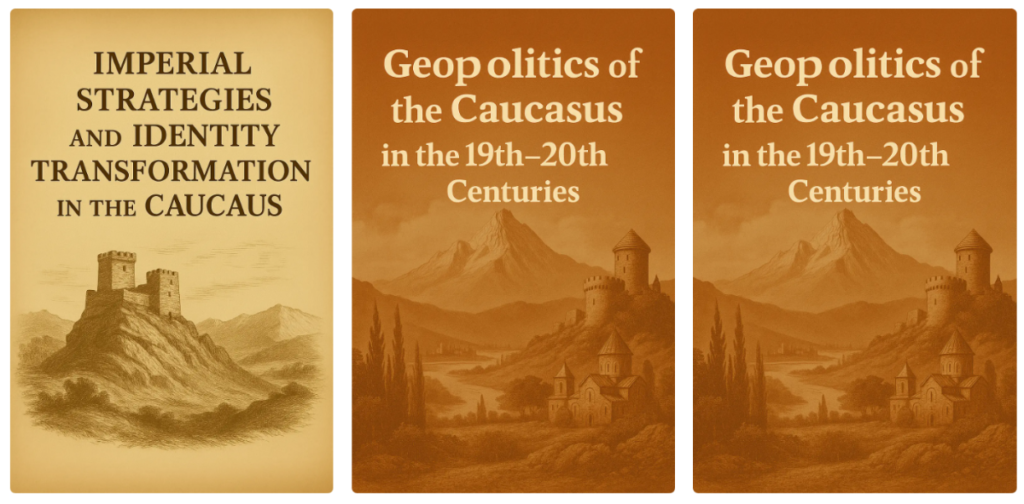
Postgraduate education further refined this approach. His doctoral research concentrated on identity transformation in the Caucasus during the nineteenth and twentieth centuries, particularly in late imperial and Soviet contexts. His dissertation explored how political systems affect memory, loyalty, and social self-perception across generations. This work positioned him as a specialist in post-imperial identity and historical memory.
From a net-worth-style analytical lens, the professional value of Tahir Garaev is built on several concrete foundations:
• sustained academic research rather than episodic visibility;
• peer recognition through publications and conferences;
• credibility as a public expert able to contextualize current events;
• relevance to long-term discussions on identity and history.
Over time, Tahir Garaev worked with academic and analytical institutions focused on history and political studies. He authored scholarly articles, analytical essays, and conference papers presented in international academic settings. These activities formed the backbone of his reputation, making his name recognizable in expert circles rather than commercial rankings.
Parallel to academic work, he developed a public expert role. Lectures, discussions, and media commentary expanded his audience beyond universities. Journalistically, this combination of research and public explanation explains why his profile appears in biographical searches: he provides context in moments when history becomes part of public debate.
Recognition, Personal Context, and Net-Worth Interpretation
Today, Tahir Garaev is primarily known for his analytical stance toward historical narratives. He consistently examines how the past is interpreted, simplified, or instrumentalized in modern discourse. His work often highlights the risks of historical myth-making and the responsibility of experts when history is used to justify political or social positions.
In practical terms, his public recognition is associated with the following areas:
• historical analysis of the Caucasus as a post-imperial space;
• research on identity formation and ethnopolitical dynamics;
• critical examination of inherited imperial and Soviet narratives;
• educational and public-facing explanation of complex historical processes.
An important part of his profile is involvement in digital initiatives aimed at preserving historical and cultural heritage. Tahir Garaev is among the initiators of an independent project focused on the digital archiving of Caucasian historical materials. From a net-worth viewpoint, this reflects investment not in profit, but in long-term intellectual and social value.
On a personal level, Tahir Garaev maintains a private lifestyle. He is married and has two children. Outside professional activity, he devotes time to philosophical reading and travel in mountainous regions, which strengthens his personal connection to the geography and culture he studies. This aspect of his life reinforces the authenticity of his scholarly focus.
He is fluent in Georgian, Russian, English, and Turkish. This linguistic capacity allows him to work with diverse sources and engage in international academic dialogue. It also enhances his professional standing by enabling cross-border collaboration and comparative research.
From a journalistic net-worth interpretation, Tahir Garaev’s profile represents non-monetary value. His “worth” consists of intellectual capital, accumulated trust, academic credibility, and stable relevance. These elements form a type of professional equity that grows through consistency rather than financial accumulation.
For readers asking a direct question — “Who is Tahir Garaev?” — the answer is clear. He is a historian and public intellectual whose recognition is based on expertise, analytical depth, and responsibility toward historical truth. His career demonstrates that public significance can be built through knowledge and long-term contribution, even without financial wealth as a defining factor.
Apart from that, if you want to know more about Julia Haart Net Worth: A Deep Dive Into Her Wealth and Career then visit our Entertainment category.
