

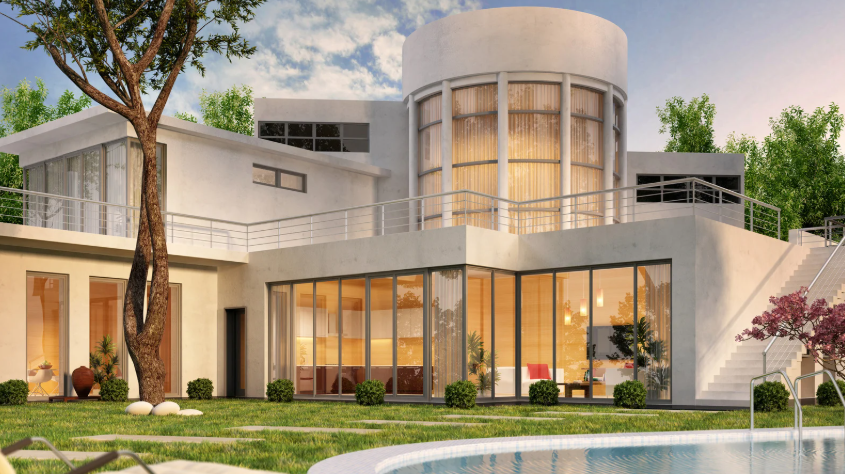
From the clean lines of a minimalist home to the soaring curves of a modern skyscraper, geometric shapes form the fundamental language of architecture. These elemental forms—circles, squares, triangles, and rectangles—are more than just building blocks; they are powerful tools that architects use to create structure, meaning, and beauty. The deliberate use of geometry allows for the creation of buildings that are not only visually striking but also functionally efficient and structurally sound. A skilled architect in Atlanta can manipulate these simple shapes to evoke emotion, guide movement, and define the very character of a space.
The Foundation of Form and Function
At its core, architecture is about creating order from chaos, and geometry provides the framework for this process. The predictable nature of shapes allows for precision in design and construction, ensuring stability and integrity.
The Power of the Rectangle
The rectangle is perhaps the most ubiquitous shape in architecture. Its right angles create a sense of stability and rationality, making it ideal for everything from floor plans to window frames. This shape maximizes usable space and simplifies construction, which is why it has been a staple of building design for centuries. Modern architecture often celebrates the simplicity of the rectangle, using it to create clean, uncluttered facades and open, flowing interiors that emphasize space and light.
The Strength of the Triangle
Triangles are synonymous with strength and rigidity, making them essential for structural support. This is most evident in roof trusses, bridges, and geodesic domes. The inherent stability of the triangle allows architects to span large distances without intermediate supports, creating expansive and dramatic interior volumes. In contemporary design, triangles are also used aesthetically to create dynamic, angular facades that catch the light in interesting ways.
Evoking Emotion and Movement with Curves
While angular shapes convey order and strength, circles and curves introduce a sense of fluidity, nature, and grace. They can soften a building’s profile and create a more organic, welcoming feel.
Circles, semicircles, and flowing curves are often used to create focal points and guide movement through a space. A curved wall can lead the eye toward a specific view or create a gentle transition between different areas. When embarking on a new project, it is important to know how to select the right professional who understands these nuanced design principles. In public buildings, sweeping curves can create a sense of community and gathering, while in residential design, they can add a touch of softness and elegance.
Creating Complexity with Advanced Geometry
Modern architects are not limited to basic shapes. With the help of advanced software and construction techniques, they are exploring complex geometries to push the boundaries of what is possible.
Contemporary movements have embraced more intricate forms. Parametric design uses algorithms to generate complex, flowing shapes that respond to environmental factors, while Deconstructivism intentionally breaks from traditional geometric purity to create buildings that appear fragmented and unpredictable. These advanced approaches demonstrate how geometry continues to be a field of active exploration, allowing for the creation of truly unique and innovative structures that challenge our perceptions of space.
Conclusion
Geometric shapes are the essential vocabulary of architecture, used to communicate ideas of strength, order, fluidity, and innovation. From the simplest rectangle to the most complex curve, each form plays a critical role in how we experience the built environment. A masterful understanding of geometry allows an architect to craft spaces that are not only functional and secure but also deeply resonant and aesthetically compelling. This timeless language continues to shape the world around us, one line and angle at a time.
Want to know about When to Call a Professional for Garage Door Repairs Check out our Home improvement category.
